

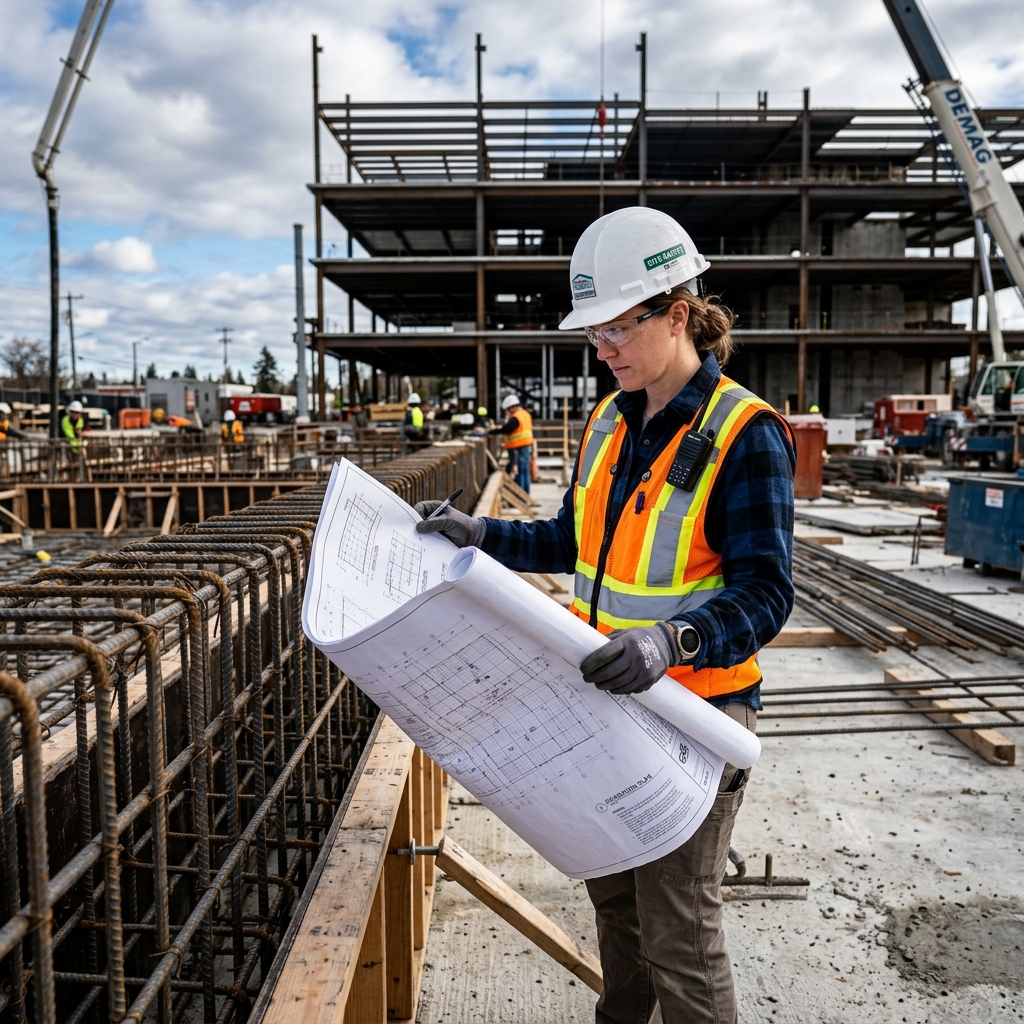
Construction in modern India is no longer just about building higher; it is about building smarter. In seismic zones where tectonic shifts are a reality, the structural backbone of a building is its most critical insurance policy.
This is where the distinction between standard steel and the 600D grade becomes not just a specification, but a safety necessity.
The Anatomy of 600D
The "600" signifies a minimum yield strength of 600 MPa, a leap above the standard 500 or 550 grades. But strength without ductility is brittle—and brittleness is the enemy of seismic safety. Our proprietary Quenching and Self-Tempering (QST) process ensures a hardened outer martensitic shell for structural rigidity, while the core remains ferritic-pearlite, allowing the steel to flex during vibrations without snapping.
"In the event of an earthquake, it is not the rigidity that saves the structure; it is the steel's ability to dissipate energy through controlled deformation."
Why Precision Matters
Beyond the raw strength, the uniformity of the rib geometry is what secures the steel to the concrete. At Koti Steels, our CNC-controlled rolling mills ensure that rib depth and spacing are consistent to the micron. This consistency translates to superior bond strength—the difference between a building that resists lateral forces and one that remains static.
As we move towards a future of vertical, high-density living, Koti Steels 600D isn't just an option; it's the standard for those who refuse to compromise on the safety of the occupants.